Simple Mood Tracker Excel: A Straightforward Way to Monitor Your Emotional Patterns
Tracking your mood can feel like one of those tasks you know would be helpful but never quite get around to starting. Between complicated apps that demand too much personal information and paper journals that require time you don't have, the barrier to actually building a consistent tracking habit is often higher than it should be. That is exactly where the Simple Mood Tracker I Excel template steps in. It strips away everything unnecessary and gives you a clean, functional tool to log how you are feeling without the overhead of learning a new system or committing to a complex routine. Whether you are new to mood tracking or just want something that does not get in your way, this template is designed with a single goal in mind: making it as easy as possible to record and see your emotional trends over time.
What Makes a Mood Tracker Truly Simple?
There is a difference between something that is basic and something that is simple. Basic means stripped of features. Simple means carefully designed so that the essential functions are immediately accessible and nothing distracts from the task at hand. The Simple Mood Tracker I Excel template falls squarely into the latter category. It includes everything you need to log your mood daily, categorize it with context, and visualize the results, all while keeping the learning curve almost flat. You open the file, and within a few seconds you understand exactly where to enter your data and what will happen next. That kind of clarity is rare in digital tools, and it is precisely what makes this template so effective for consistent, long-term use.
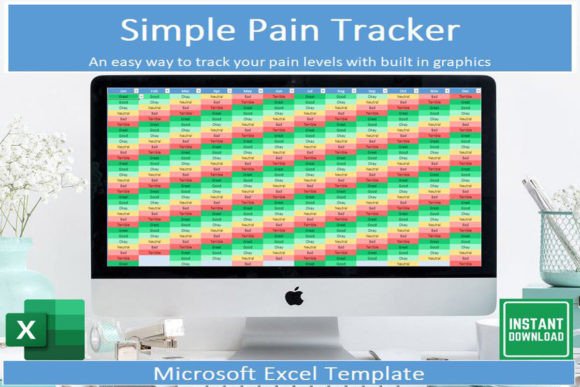
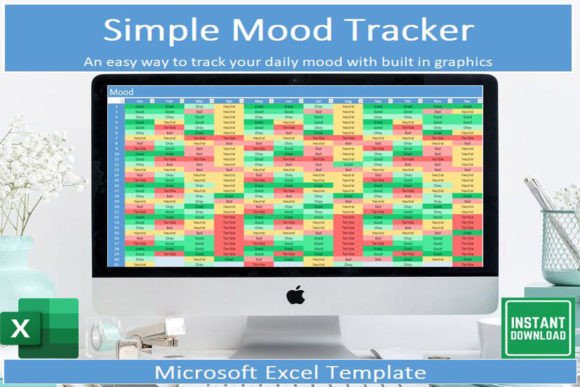
The core of the template is built around drop-down lists and automated color changes. Instead of typing out your mood each day, you select from a pre-defined list. This speeds up the process considerably and ensures that your data remains consistent, which is critical when you want accurate visual feedback later. When you select a mood, the corresponding cell changes color automatically. That immediate visual cue turns your spreadsheet into something that feels alive and responsive, rather than a static grid of text. It also means that even a quick thirty-second entry at the end of the day gives you a satisfying sense of progress.
The Visual Mood Board and the Automatically Updating Graph
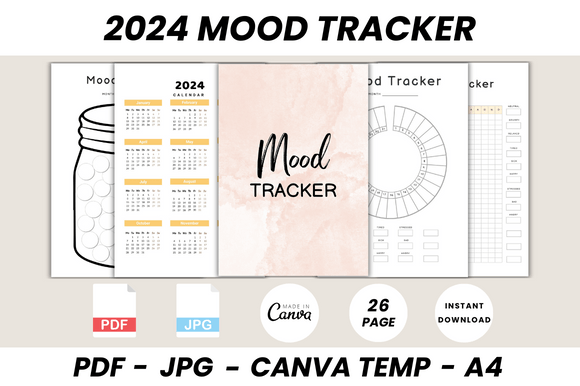
One of the most compelling features of this template is the visual tracker mood board. This is a dedicated tab within the spreadsheet that transforms your daily entries into a color-coded overview of your emotional landscape over weeks or months. Instead of scrolling through rows of data, you can glance at the mood board and immediately see patterns emerging. Maybe Mondays tend to show a cluster of lower-energy colors, or perhaps the days after a good night's sleep consistently show brighter hues. These visual patterns are difficult to spot when you are just reading a list, but they become obvious when you see them mapped out in a grid of colors.
In addition to the mood board, the template includes a built-in automatically updating graph. As you add new entries, the graph adjusts in real time to reflect your latest data. This is particularly useful if you are the kind of person who responds better to line charts or bar graphs than to color grids. Having both visual tools available means you can choose whichever representation makes the most sense to you on any given day. The graph does not require you to click any refresh buttons or manually update ranges; it simply works as you add data. That kind of seamless integration is what separates a well-thought-out template from a generic spreadsheet you might throw together yourself.
Who Should Use This Template?
The Simple Mood Tracker I Excel template is ideal for anyone who wants a lightweight, no-fuss method of keeping an eye on their emotional well-being. It works well for people who are curious about their mood patterns but do not have a diagnosed condition that requires clinical tracking. It is also a great starting point if you have never tracked your mood before and want to see whether the practice is helpful before committing to a more elaborate setup. The template gives you enough structure to be useful but leaves plenty of room for you to build your own habits around it.
If you have a pre-existing mental health condition or need a more comprehensive tool with additional metrics, sleep logs, medication tracking, or detailed notes, you may want to wait for the more detailed template that is coming to the shop soon. That version will include much richer functionality for those who need deeper insights. For now, the simple version covers the basics exceptionally well and is designed for people who value speed and ease over exhaustive detail. It is also worth noting that this template is for personal use only. The files are not to be shared or resold, which helps support the small business behind it and ensures that the creator can continue developing useful tools.
Fitting Mood Tracking Into a Modern Lifestyle
One of the most common barriers to consistent mood tracking is that people feel it takes too much time or requires them to be at a computer. This template addresses both concerns directly. Because it is a Microsoft Excel file, you can download the free Microsoft Excel app on your mobile device and update your mood from anywhere. Whether you are on the bus, sitting in a waiting room, or winding down in bed, you can open the file, make your selection, and close it in under a minute. This mobile accessibility is a game changer for maintaining consistency because it removes the friction of having to remember to open your laptop or find a pen and paper.
The instructions included with the template are clear and practical. They explain exactly what each part of the spreadsheet does and how to use it, so you are never left guessing. This is particularly helpful if you are not an experienced Excel user. The template is designed to be approachable for everyone, regardless of technical skill level. The drop-down lists and automated color changes do all the heavy lifting, so you can focus on the simple act of recording your mood rather than worrying about formulas or formatting.
Practical Benefits You Will Notice Quickly
After using the Simple Mood Tracker I Excel template for even a couple of weeks, you will likely start noticing certain patterns in your emotional data. Perhaps you will see that your mood tends to dip in the afternoon and recover by the evening, or that certain days of the week consistently feel more challenging. This kind of awareness is valuable because it allows you to plan around your emotional rhythms. If you know that Wednesday afternoons are typically low-energy for you, you can schedule lighter tasks during that time or build in a small self-care ritual to help balance things out.
The template also encourages accountability without pressure. Because it is so quick to use, you are more likely to enter data even on days when you do not feel great. That is important because the low days are often the ones that provide the most useful information. If you only track your mood when you are feeling good, your data will be skewed and less helpful. The simplicity of this template reduces the likelihood of skipping entries, which leads to a more accurate and complete picture of your emotional life over time.
Another practical benefit is that the template is a single file that lives on your device. There is no cloud account to create, no subscription fee, and no risk of your data being used for purposes you did not agree to. Your mood data remains private and under your control. For many people, that level of privacy is a significant consideration, especially when dealing with something as personal as emotional health.
Scenarios Where This Template Shines
Imagine you are someone who works in a high-stress environment and wants to track how your mood correlates with workload, sleep, or social interactions. You open the template on your phone during a lunch break, select your mood from the drop-down list, and add any brief context if needed. Over time, you can look at the color-coded mood board and see clear patterns that help you make decisions about your schedule or coping strategies. That is a real-world application of this tool that requires minimal effort but yields meaningful insights.
Another scenario might be a student who is adjusting to a new routine and wants to monitor their emotional state during the transition. The template provides a quick way to log feelings without disrupting study time, and the automatically updating graph gives immediate feedback on whether things are trending in a positive direction. For someone in that situation, the template serves as a gentle check-in rather than a burdensome task.
You might also be someone who simply enjoys data and self-reflection. The Simple Mood Tracker I Excel template satisfies that curiosity without demanding too much time. It becomes a small ritual at the end of the day, a way to briefly pause and acknowledge how you felt before moving on. Over weeks and months, you build a personalized record that is genuinely interesting to look back on.
What to Consider Before You Start
Because the template is an Excel file, you will need either Microsoft Excel installed on your computer or the free Microsoft Excel app on your mobile device. Most people already have access to Excel through work, school, or personal use, but it is worth confirming before you download. The free mobile app works well for quick entries, though you may prefer the desktop version for reviewing your mood board or graph in larger view.
The template is designed for personal use only, which means you are purchasing a license to use it for yourself but not to share or resell. This is a common model for digital products and helps keep the price reasonable while supporting the creator. If you have questions about the template or how to use it, the instructions provide clear guidance, and you are encouraged to reach out directly to the creator, John, who runs Veritas Templates. Small business support like this often comes with a level of responsiveness and care that larger companies cannot match.
If you find that the simple version is working well for you and you want to expand your tracking later, the more detailed template will be available soon. That version will include additional fields and deeper analysis options for those who need them. For now, though, the simple version is a solid foundation that covers the essentials and does so with remarkable ease of use.
Starting a mood tracking habit does not have to be complicated. The Simple Mood Tracker I Excel template proves that a straightforward tool, used consistently, can provide real value without adding stress to your day. If you have been looking for a way to understand your emotional patterns better without investing in a complex system, this is a practical place to begin. Open the file, make your first entry, and see where the data takes you.